Lofty Prototype 1 - Frame
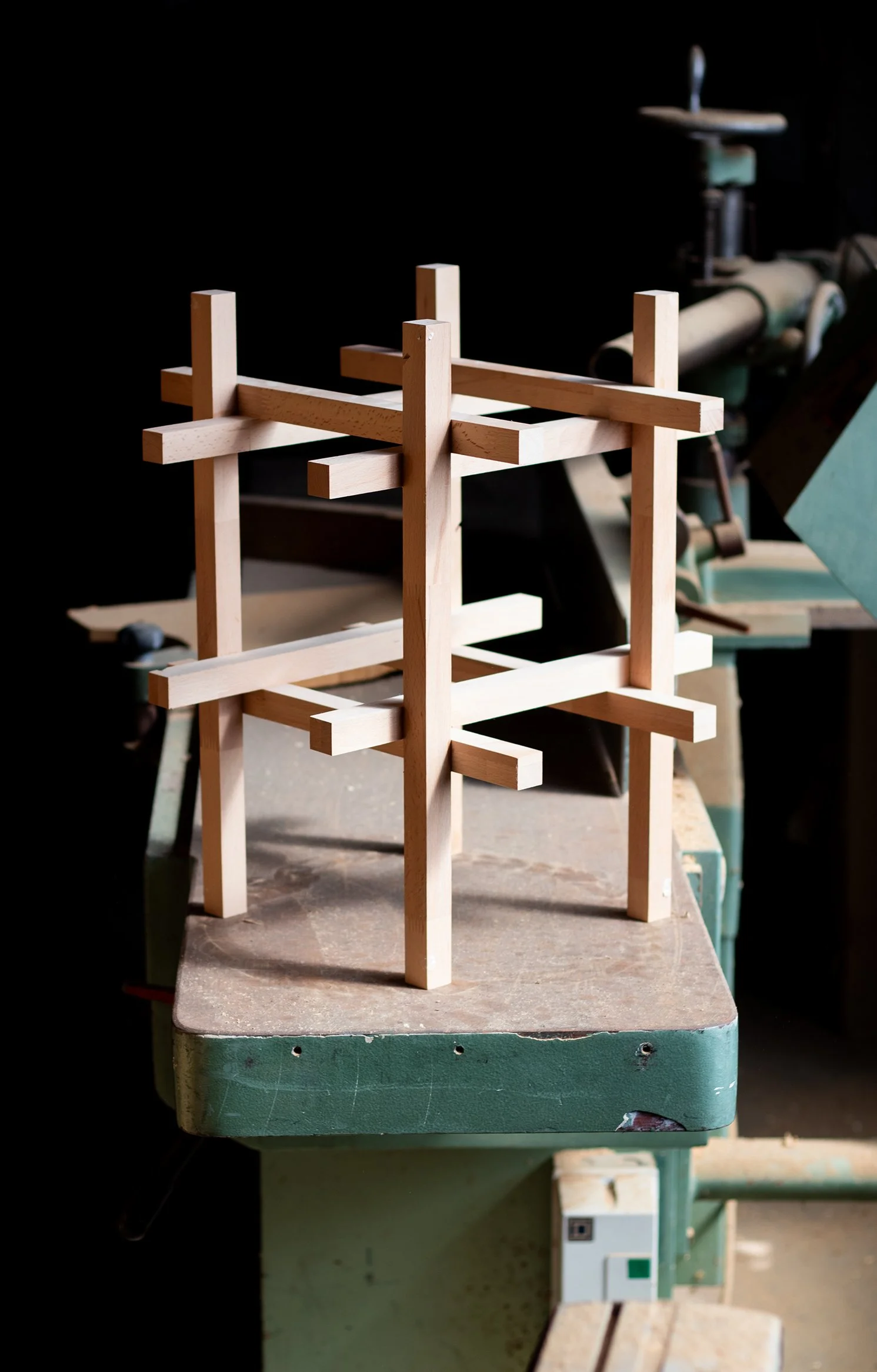
You would be forgiven for thinking this prototype looks like a bunch of off-cut wood from another project, because that’s the truth. As always, it’s hard to know when a prototype will lead anywhere, so the idea is simply to build, assess, and see where the work takes you.
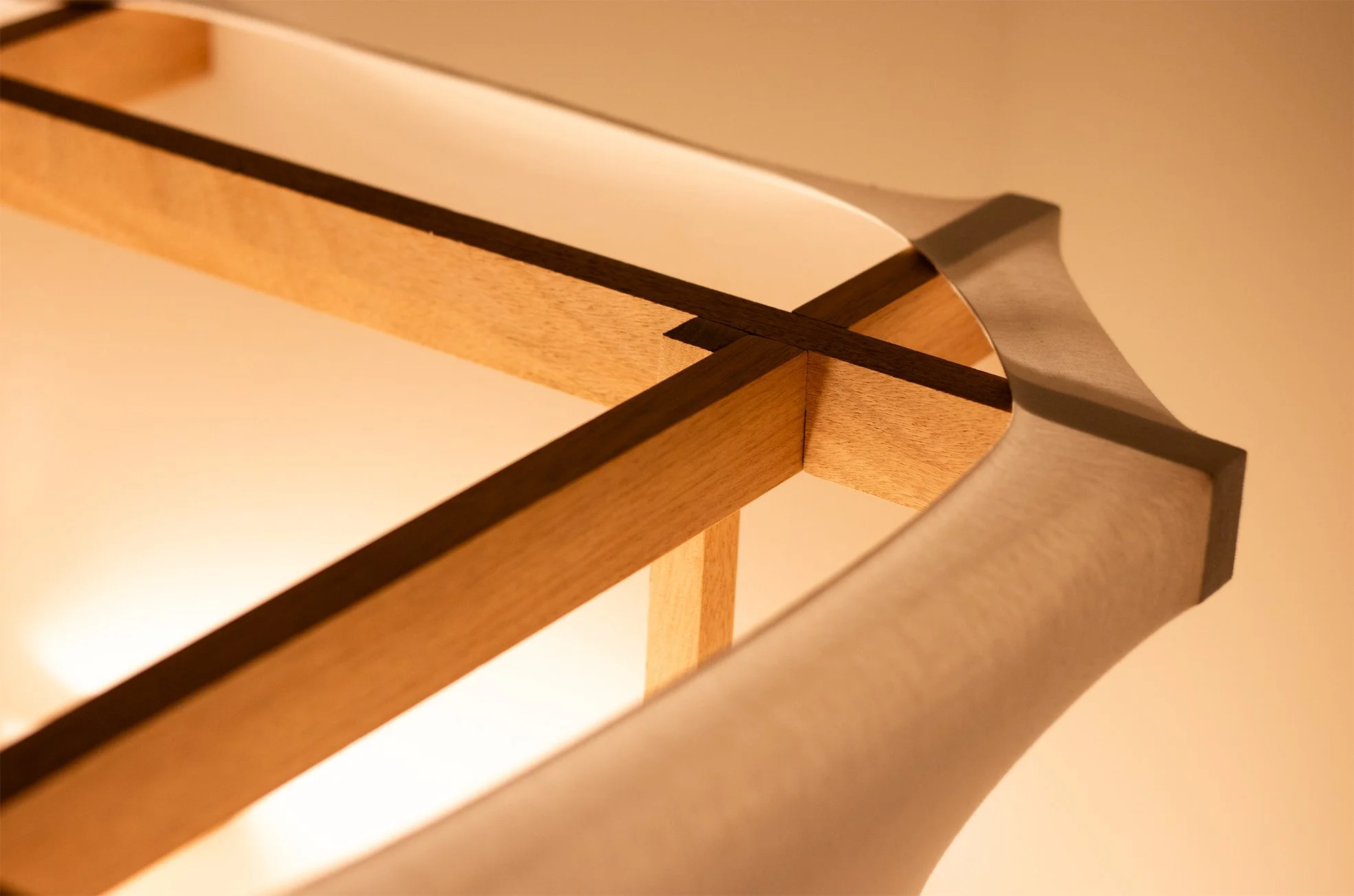
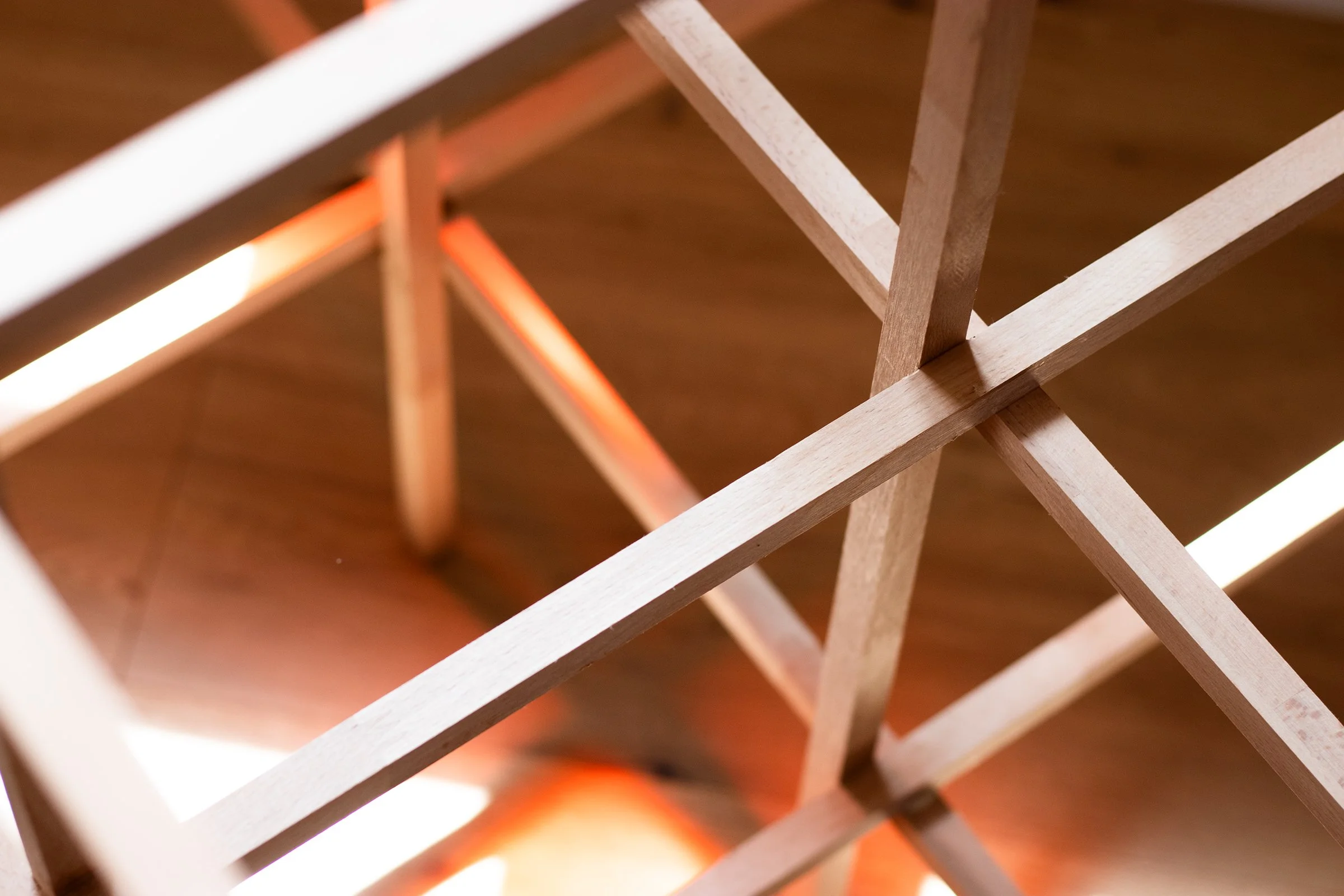
In this case, the frame is made from 28 mm beech. The objective was to address challenges with joinery in three dimensions—something you see often in Japanese woodwork. This included testing the feasibility of using certain high-end wood glues to achieve efficient manufacturability, and simply understanding the proportions of the object. The outcome is stout. I think I could throw this off a roof and it would be just fine.
The use of beech wood is ideal for this application, but securing a good supply that isn’t finger-jointed is difficult and expensive. As with many prototypes, it’s beneficial to use pre-made slabs (designed for kitchen benches) from local large chain stores. The slabs are fairly dimensionally stable and significantly reduce the amount of machine time required. The trade-off is that they are objectively expensive. However, I’m happy to make that trade if it allows me to “knock” up ideas like this without too much friction.
The takeaway from this prototype was that the three-way glue method works incredibly well. The structure is strong and cross-braced, and would be ideal for furniture projects. The polyurethane glue is impressive but does introduce some assembly issue, namely, cleanliness of application. Any glue on your hands will transfer to components and make finishing difficult. Any production of something like this would require well-built jigs to make assembly efficient. But thats standard for the furniture industry so great loss there.
From a design perspective, the structure is interesting, and when well assembled it’s hard to tell what method was used to produce the intersections. I’m drawn to the negative space between components and wonder what might happen if this approach were applied in a lighting or furniture context.
The arrangement of the 12 components in XYZ is considered and aimed at symmetry. I think the knee jerk reaction for the intersections would be to have all sticks live in the same plane so that they all meet at one point. But I tend to like the offset nature of what’s being presented here.
This is a test for another time but I wonder what would be the structural outcome of not following symmetry. Of course it would be more difficult to assemble but would it lead to a more interesting free form composition? Its worth finding out.




Lofty Prototype 1 - Frame + Skin
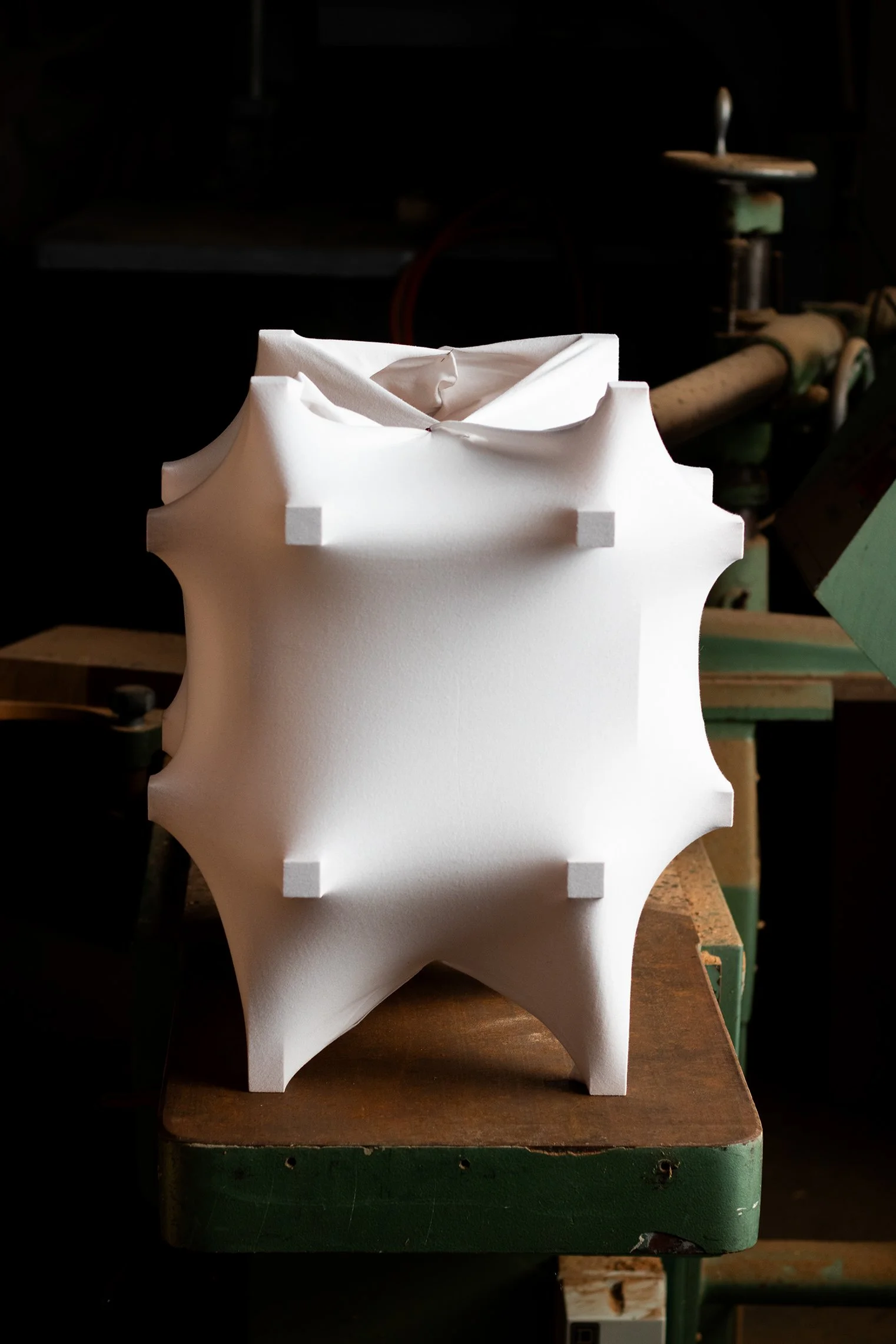
The addition of the fabric was a bit of a shock at first. The material itself came from a fairly standard local supplier, chosen because it was deemed stretchy enough, but also because it had a warm white colour that differed from the other options, which were much more blue-white.
The shock came from its interaction with light, specifically direct sunlight. In this case, it was an area of the factory that, due to its orientation, size, and the type of frosted glass used, produces surprisingly good photographs.
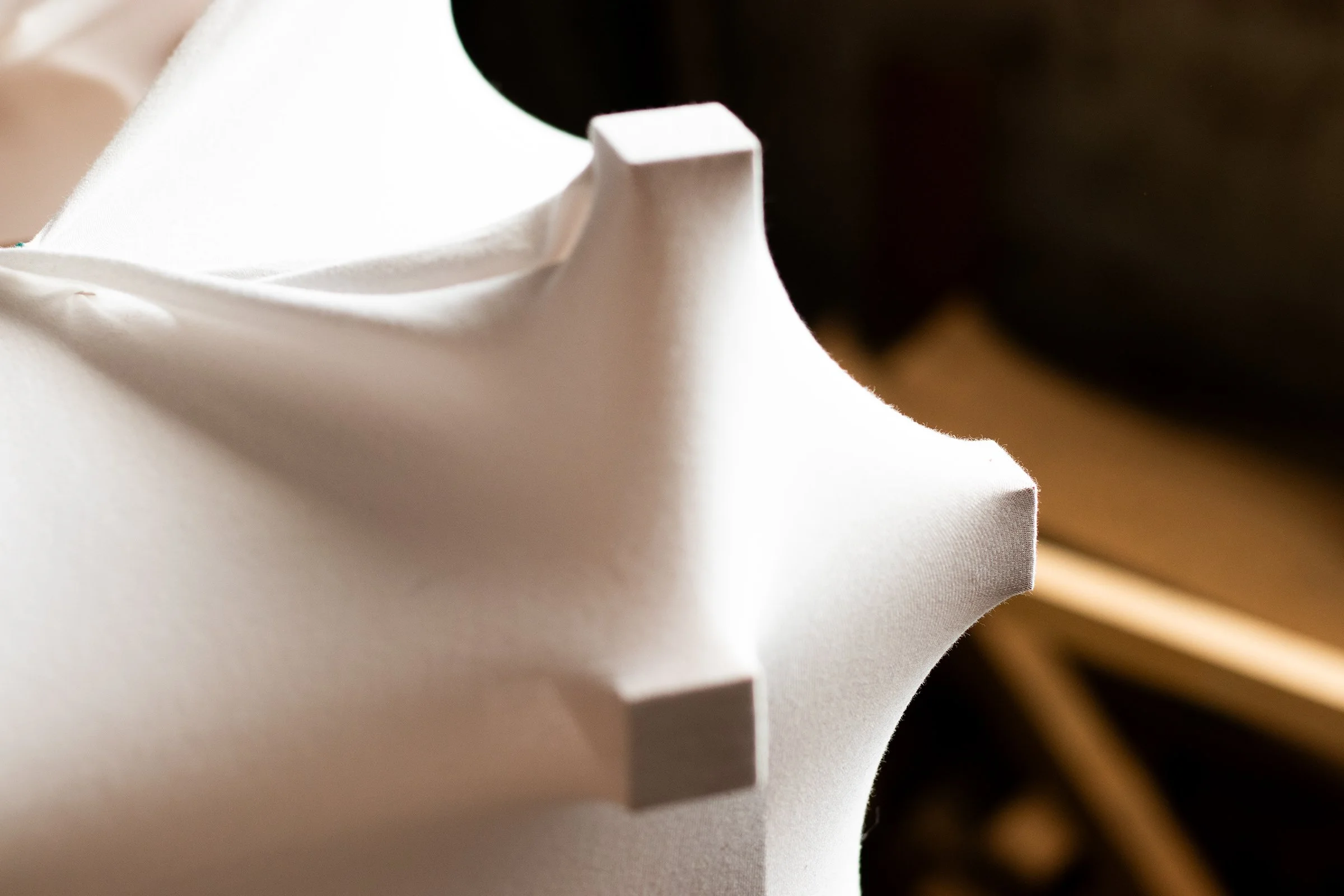
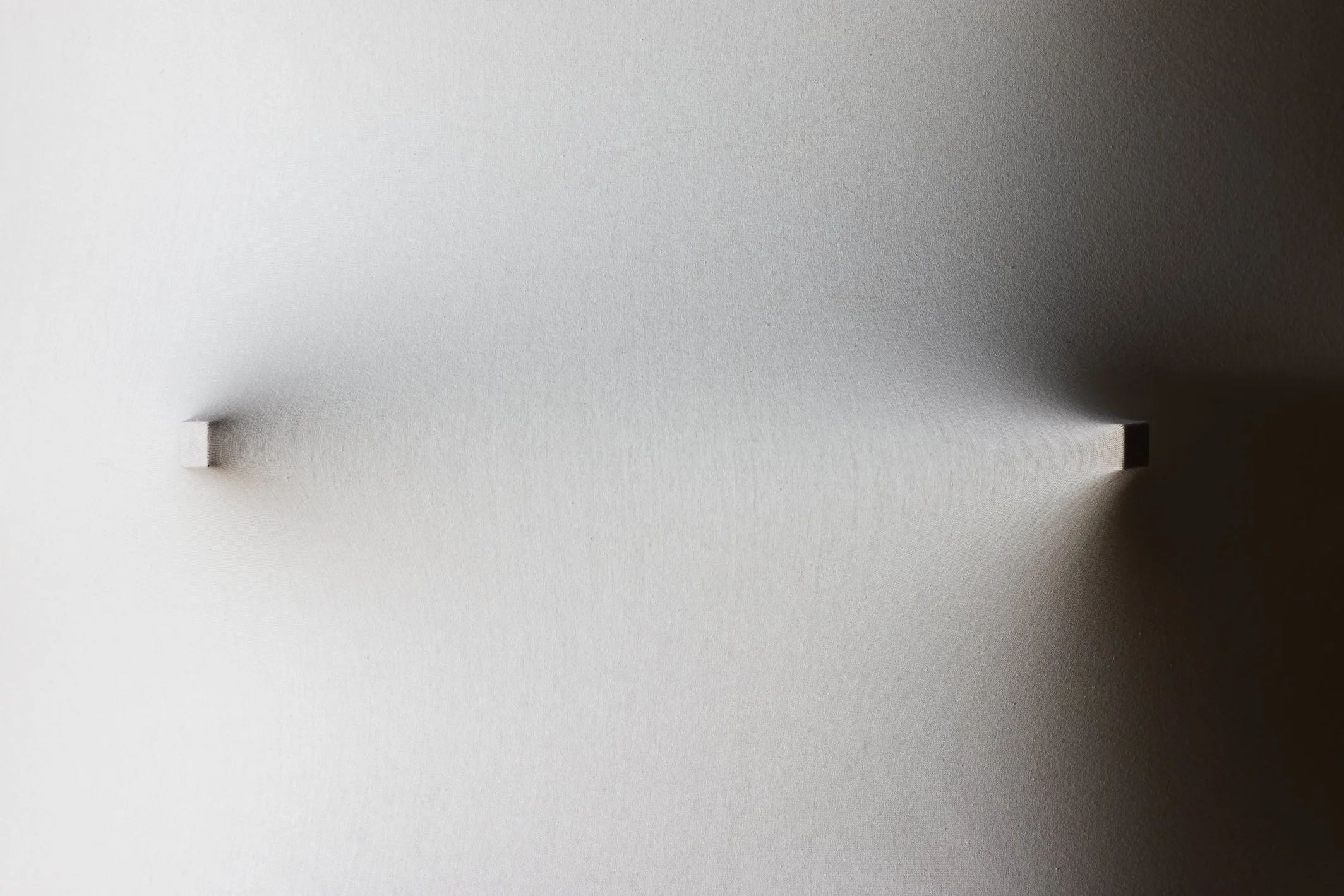
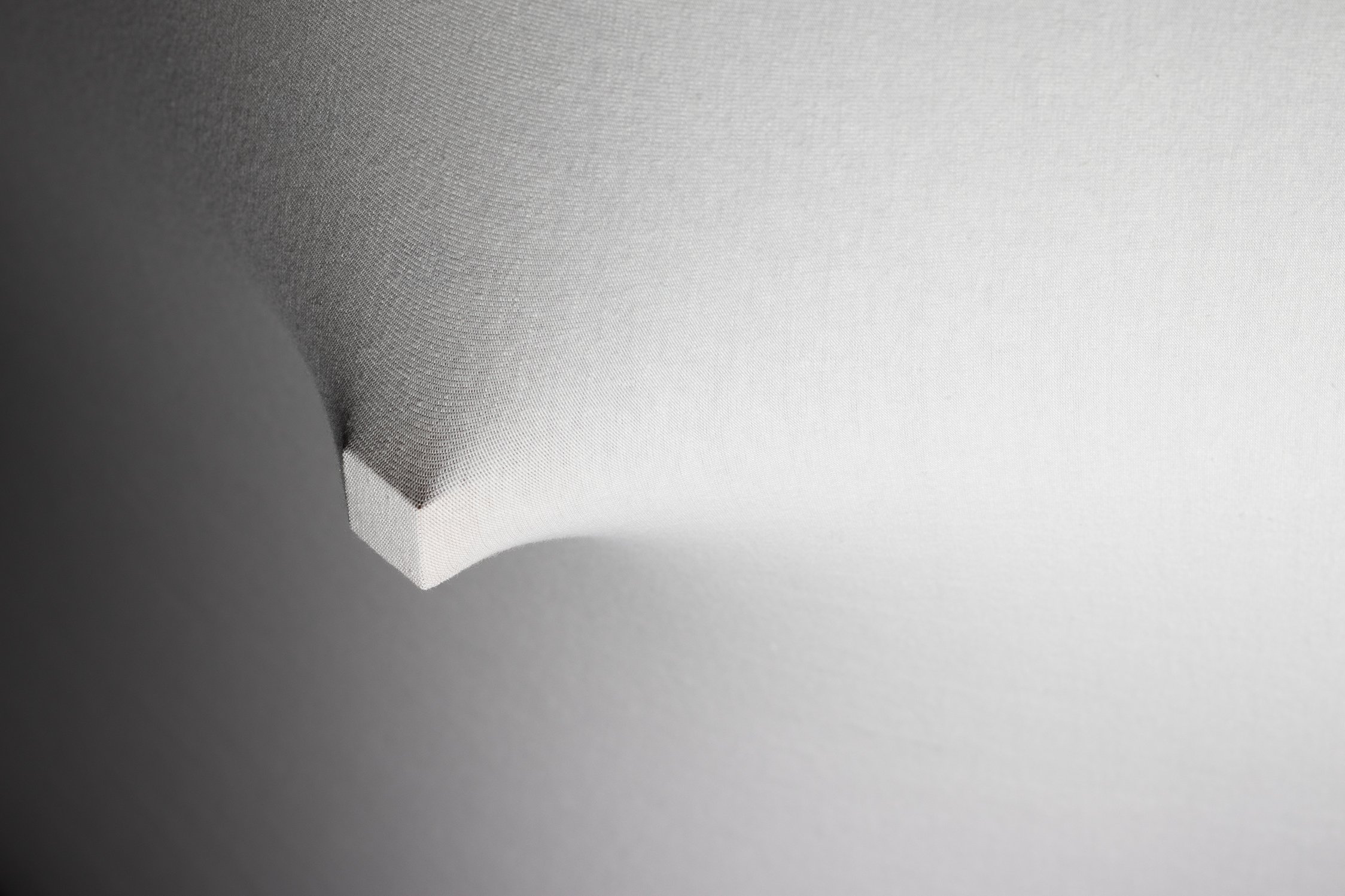
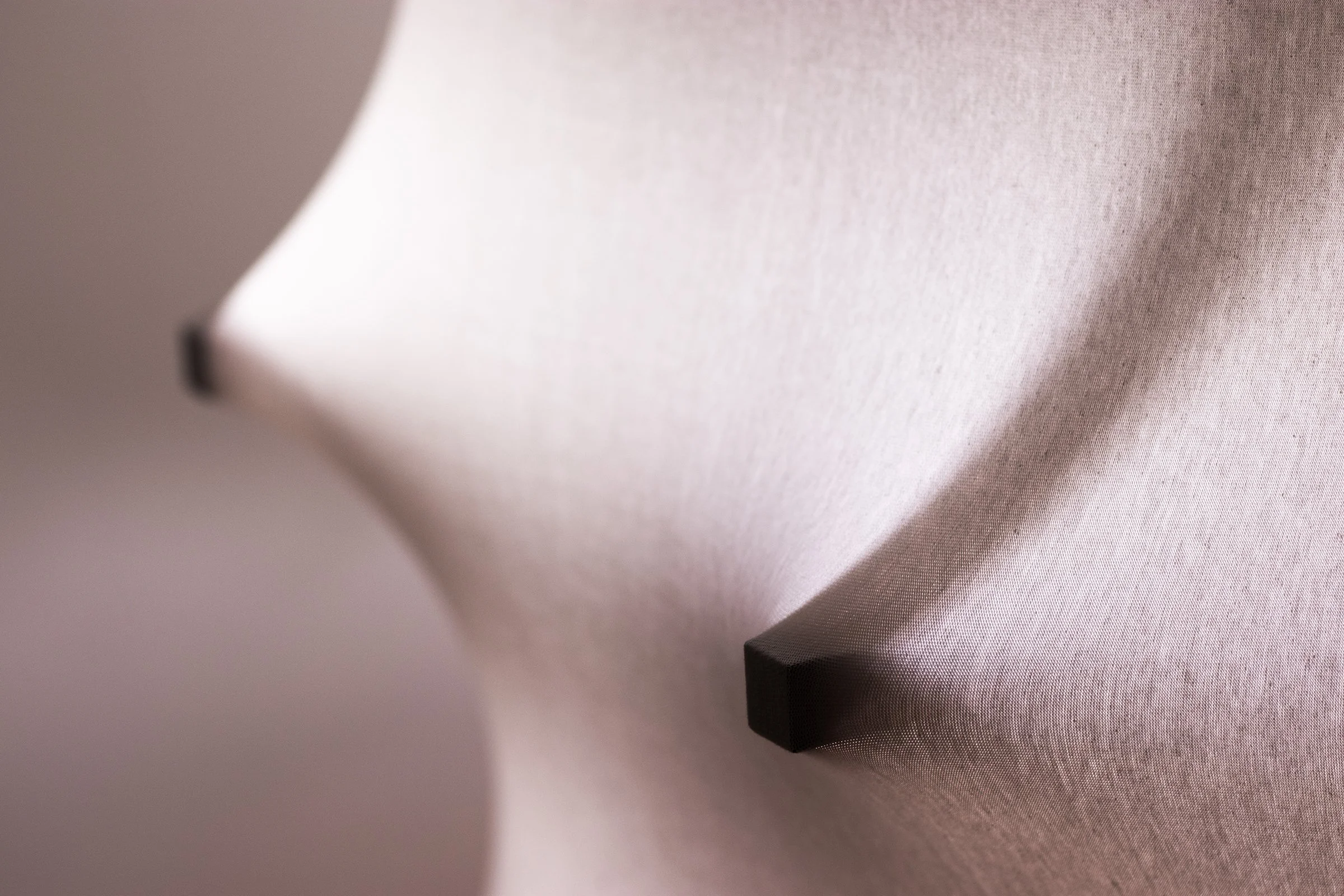
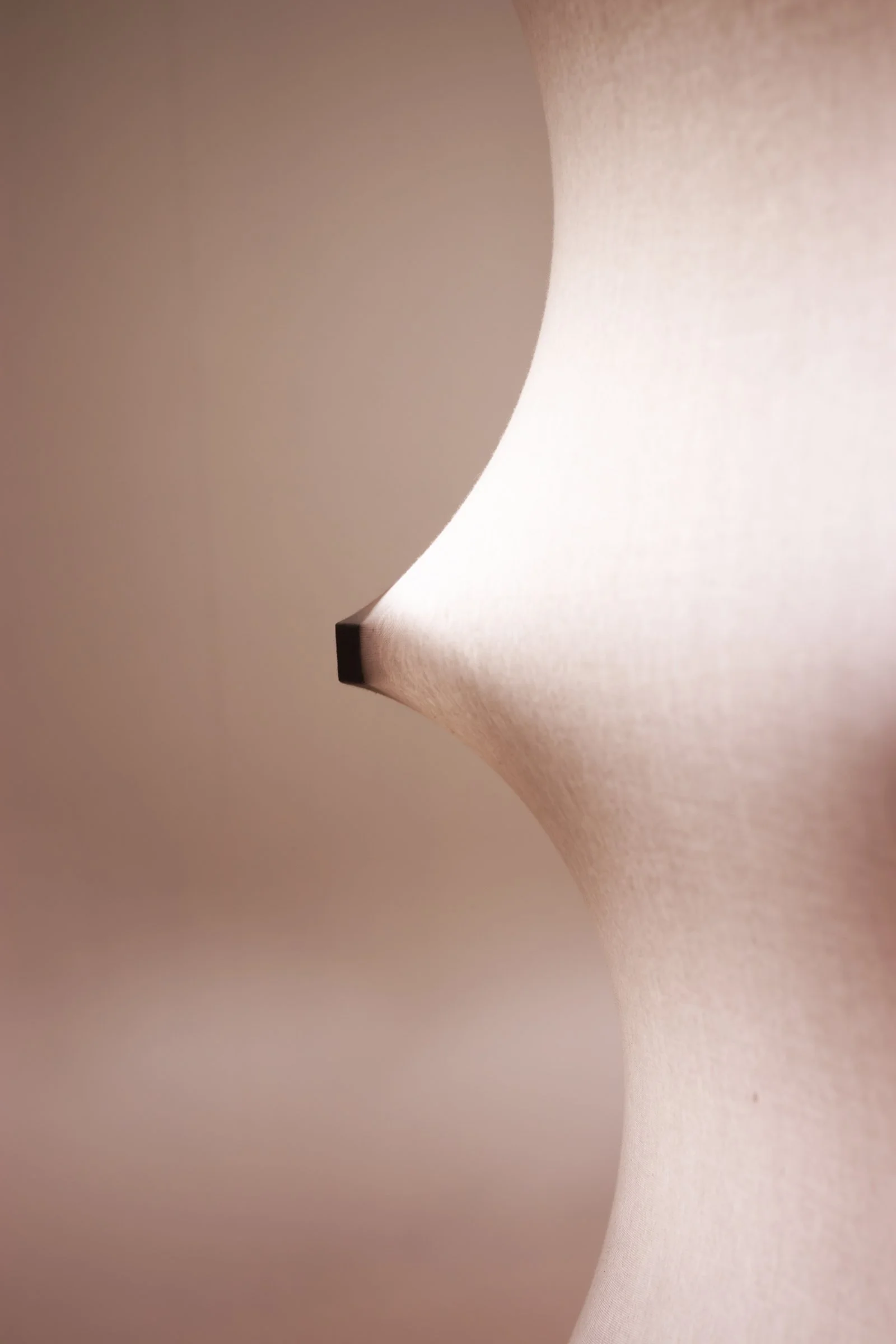
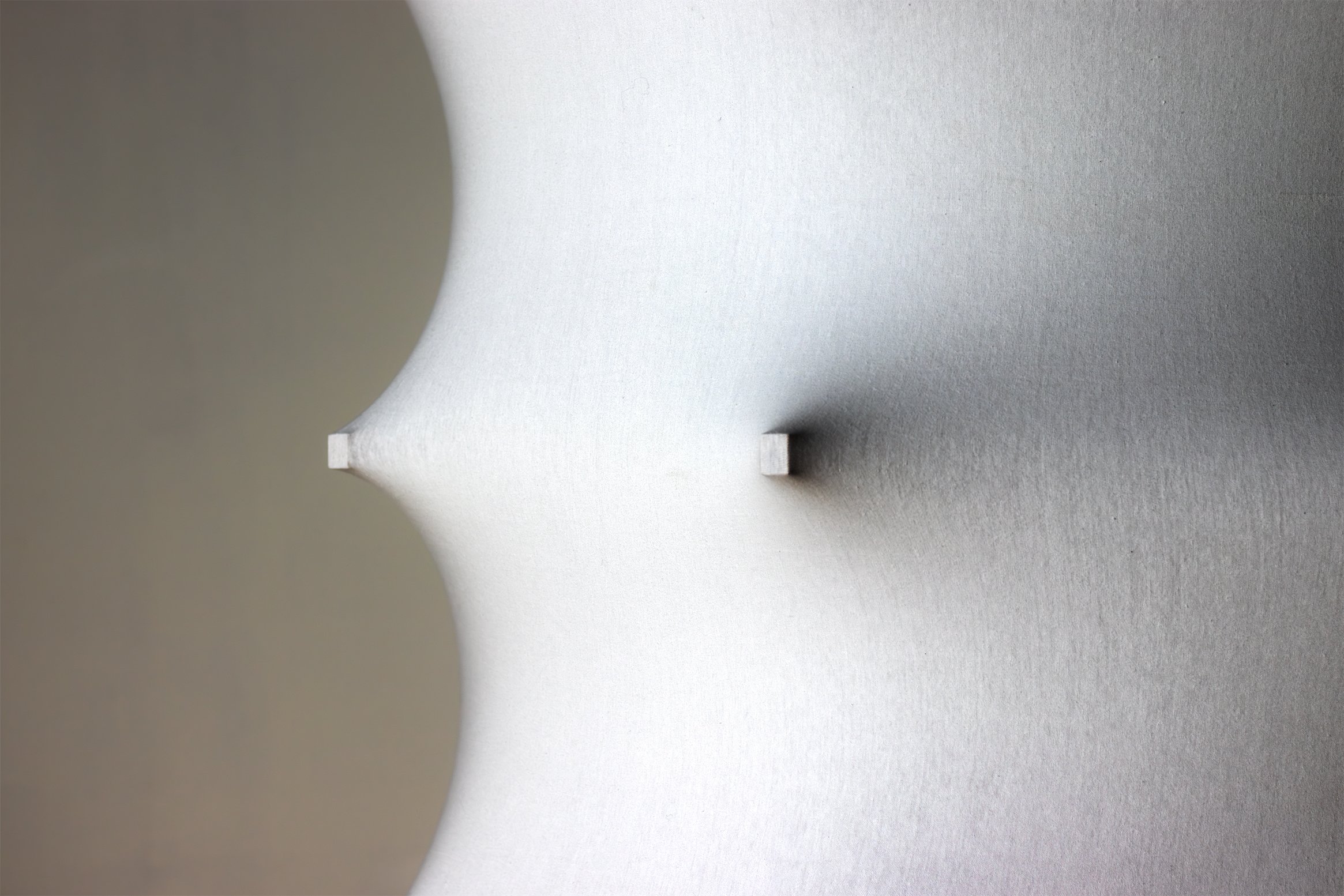
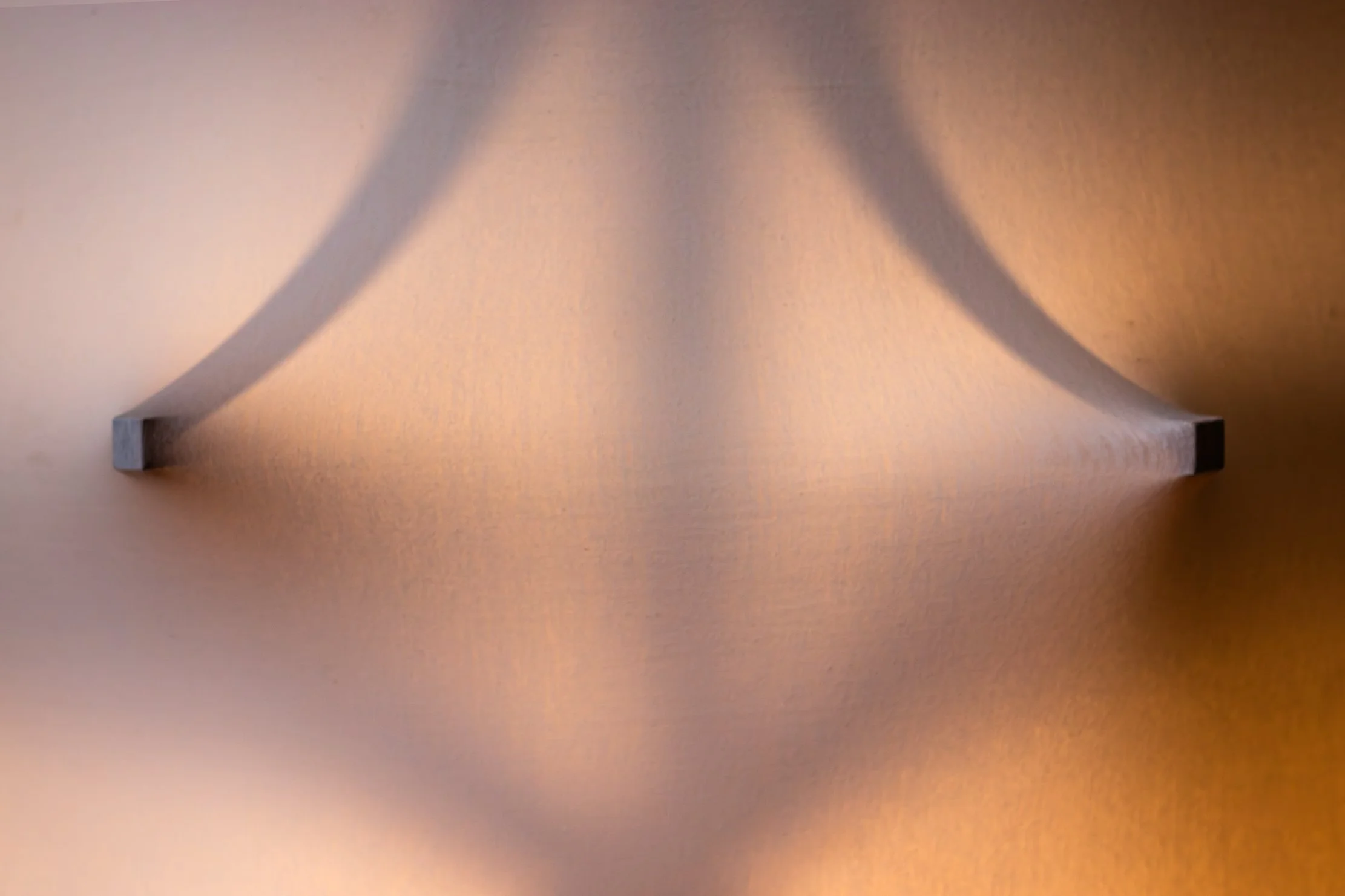
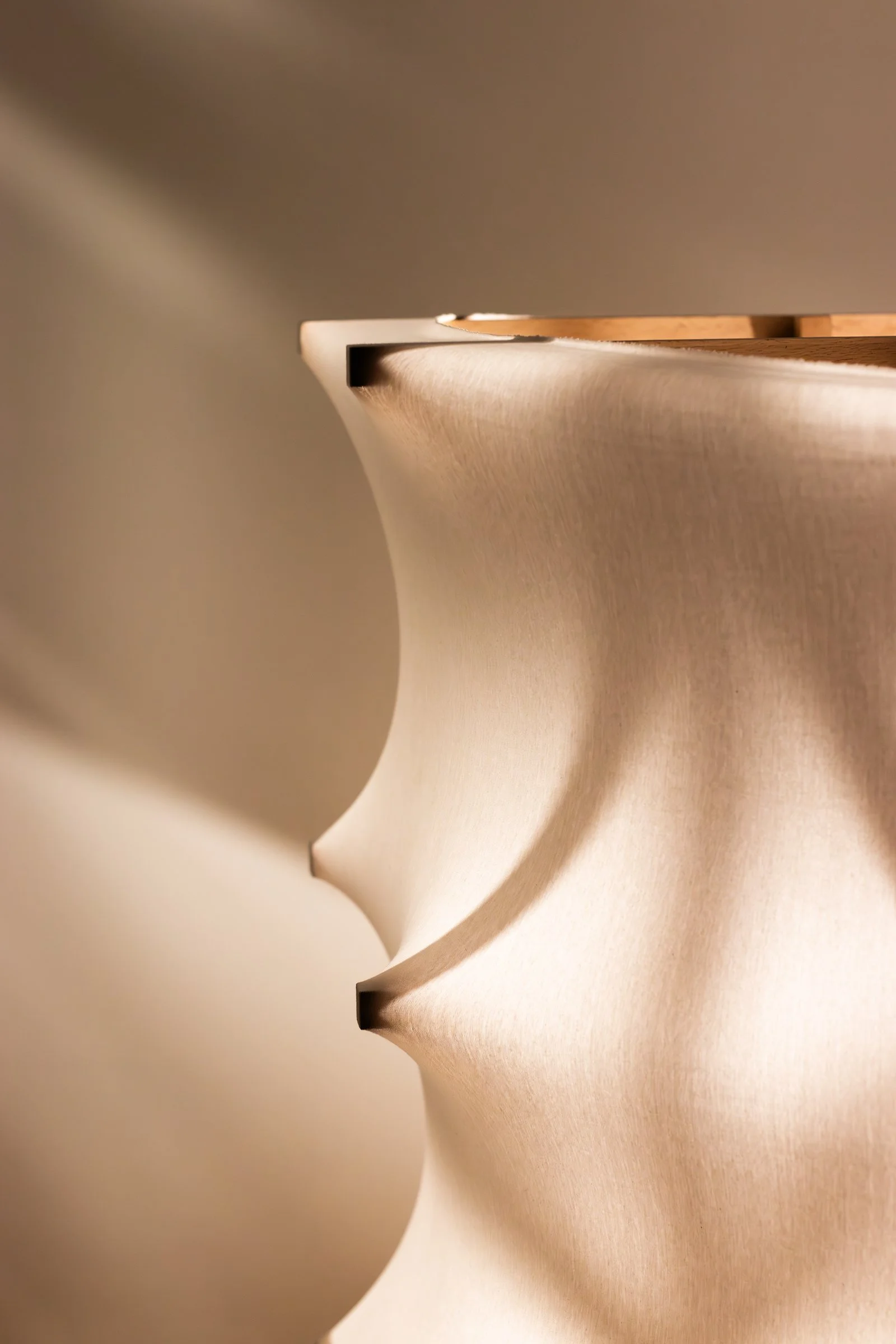
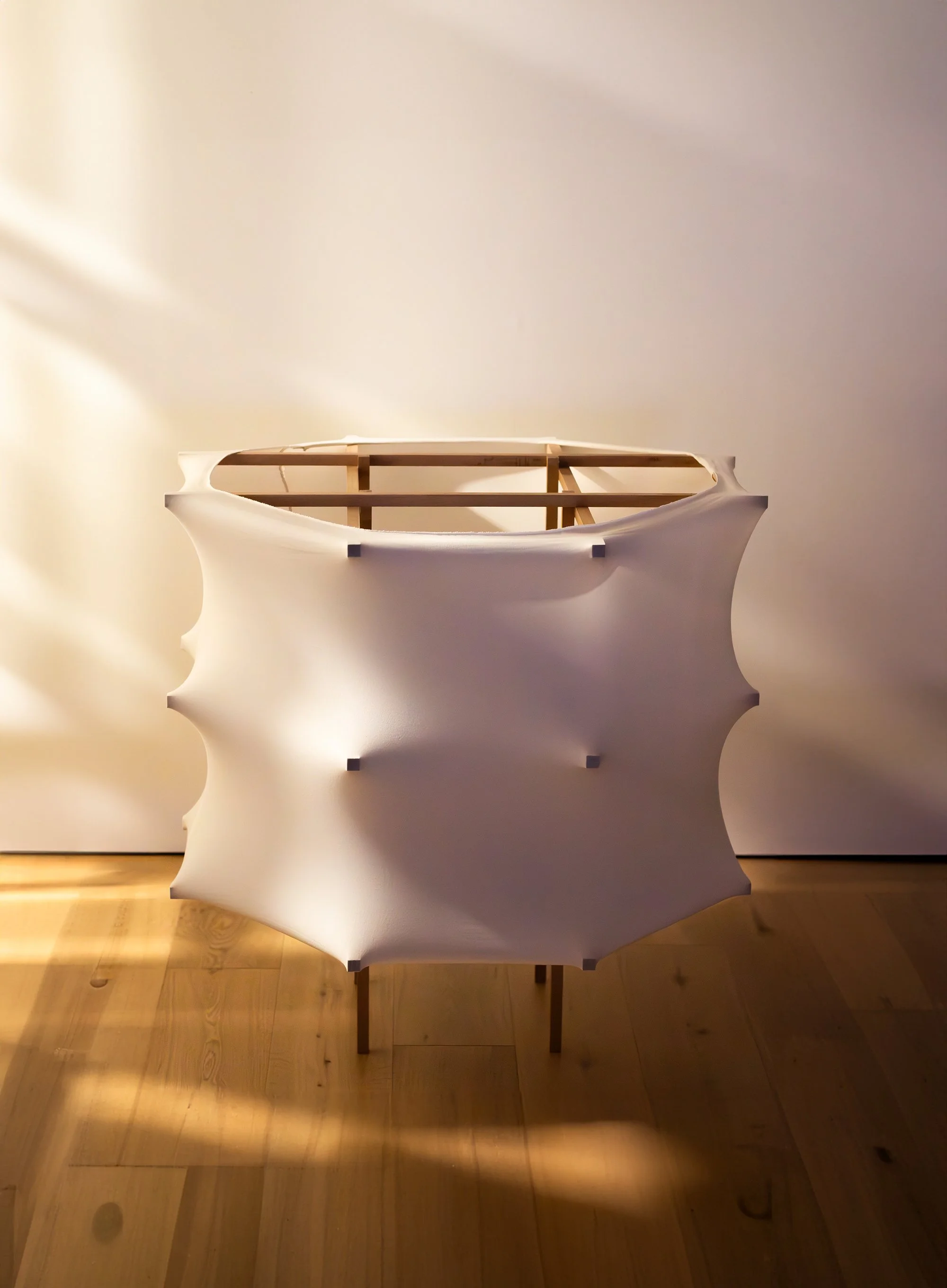
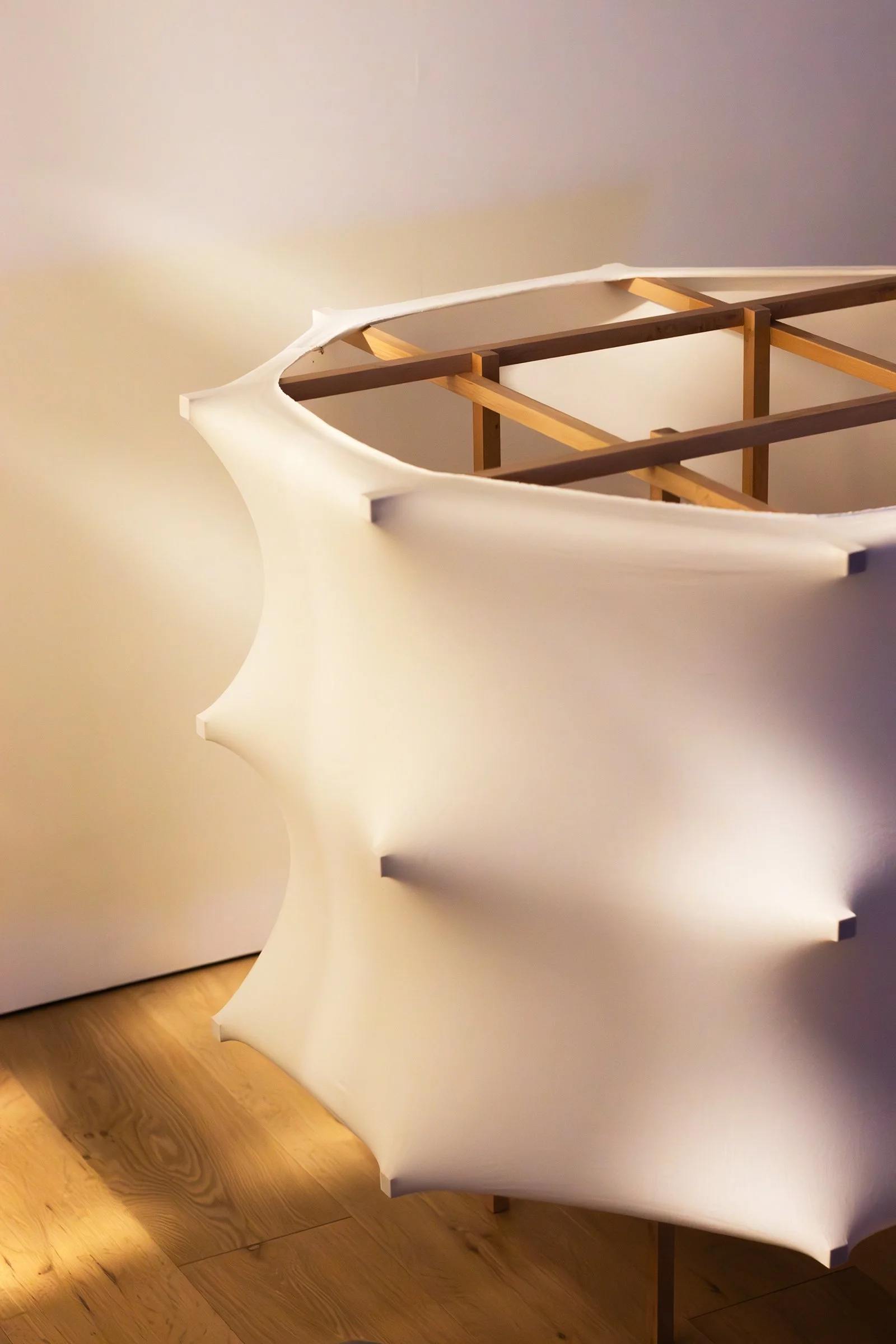
Once the material was loosely stretched over the frame with a light source inside, it began to give up some of its opacity and shift toward a subtle transparency. Not in a linear fashion, mind you. It seems to be very much dependent on the amount of tension in the fibres and the shapes it’s forced into. Additionally, the way light plays across the warm white exterior is particularly interesting. Together, this creates a mix of shadow cast from within the structure and highlights on the exterior surface. The square protrusions of the inner frame add additional drama. The end result is something even a very skilled CAD sculptor would take a long time to develop on a computer.
There’s an obvious tension between the engineered inner frame, which could be built to exacting tolerances if needed, and the soft outer skin, which is allowed to settle into whatever form it finds. For this first prototype, I’ve simply used bobby pins to wrap it around the frame. This obviously needs to be addressed, but it gives a strong impression of what might be possible.
Two updates feel necessary. The first is revisiting the proportions of the frame, moving toward something more delicate and away from the stoutness of this prototype. The second is producing a more nicely finished outer skin. I have access to an overlocker that should do the job, it’s just a matter of getting the old thing to sew.


Lofty Prototype 2 - Frame
The addition of the fabric was a bit of a shock at first. The material itself came from a fairly standard local supplier, chosen because it was deemed stretchy enough, but also because it had a warm white colour that differed from the other options, which were much more blue-white.
The shock came from its interaction with light, specifically direct sunlight. In this case, it was an area of the factory that, due to its orientation, size, and the type of frosted glass used, produces surprisingly good photographs.
Once the material was loosely stretched over the frame with a light source inside, it began to give up some of its opacity and shift toward a subtle transparency. Not in a linear fashion, mind you. It seems to be very much dependent on the amount of tension in the fibres and the shapes it’s forced into. Additionally, the way light plays across the warm white exterior is particularly interesting. Together, this creates a mix of shadow cast from within the structure and highlights on the exterior surface. The square protrusions of the inner frame add additional drama. The end result is something even a very skilled CAD sculptor would take a long time to develop on a computer.
There’s an obvious tension between the engineered inner frame, which could be built to exacting tolerances if needed, and the soft outer skin, which is allowed to settle into whatever form it finds. For this first prototype, I’ve simply used bobby pins to wrap it around the frame. This obviously needs to be addressed, but it gives a strong impression of what might be possible.
Two updates feel necessary. The first is revisiting the proportions of the frame, moving toward something more delicate and away from the stoutness of this prototype. The second is producing a more nicely finished outer skin. I have access to an overlocker that should do the job, it’s just a matter of getting the old thing to sew.
Lofty Prototype 2 - Frame
The addition of the fabric was a bit of a shock at first. The material itself came from a fairly standard local supplier, chosen because it was deemed stretchy enough, but also because it had a warm white colour that differed from the other options, which were much more blue-white.
The shock came from its interaction with light, specifically direct sunlight. In this case, it was an area of the factory that, due to its orientation, size, and the type of frosted glass used, produces surprisingly good photographs.
Once the material was loosely stretched over the frame with a light source inside, it began to give up some of its opacity and shift toward a subtle transparency. Not in a linear fashion, mind you. It seems to be very much dependent on the amount of tension in the fibres and the shapes it’s forced into. Additionally, the way light plays across the warm white exterior is particularly interesting. Together, this creates a mix of shadow cast from within the structure and highlights on the exterior surface. The square protrusions of the inner frame add additional drama. The end result is something even a very skilled CAD sculptor would take a long time to develop on a computer.
There’s an obvious tension between the engineered inner frame, which could be built to exacting tolerances if needed, and the soft outer skin, which is allowed to settle into whatever form it finds. For this first prototype, I’ve simply used bobby pins to wrap it around the frame. This obviously needs to be addressed, but it gives a strong impression of what might be possible.
Two updates feel necessary. The first is revisiting the proportions of the frame, moving toward something more delicate and away from the stoutness of this prototype. The second is producing a more nicely finished outer skin. I have access to an overlocker that should do the job, it’s just a matter of getting the old thing to sew.